In Defense of the Second Amendment
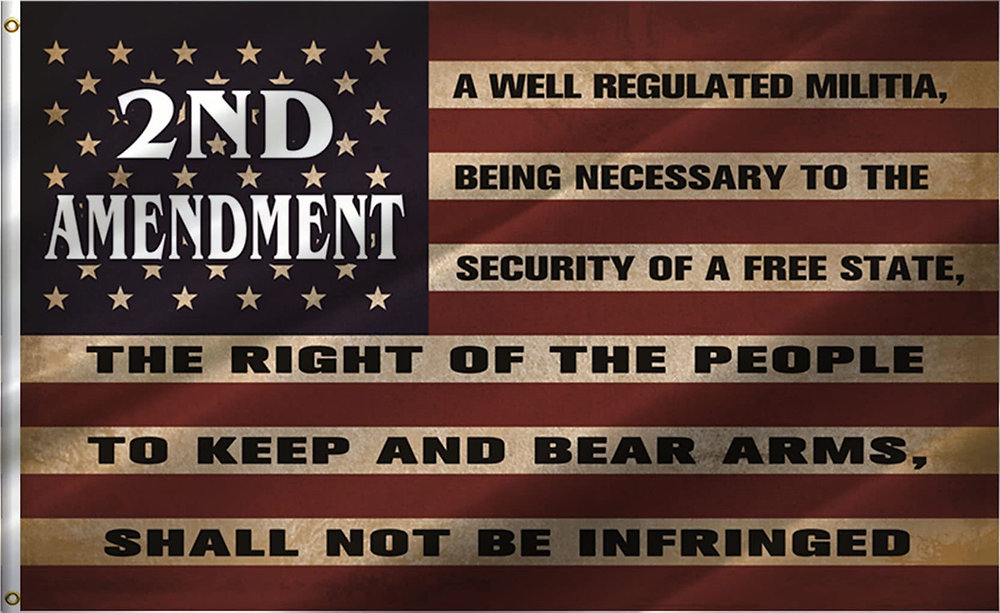
The Founders did not treat the right to bear arms as a mere preference or a cultural habit. They saw it as a necessary protection built on two hard truths: history shows that power tends to concentrate, and human nature does not reliably restrain itself without checks.
The men who fought for American independence understood tyranny not as a distant theory, but as a recurring pattern in human affairs. They had studied history, from ancient republics to the English struggle against royal overreach, and they concluded that governments, if left unchecked, often expand their power at the expense of liberty. That is why the Second Amendment was understood not as an isolated clause, but as part of a larger system of safeguards meant to preserve a free people.
Human Nature and Power
The Founders had a skeptical view of human nature. They believed that ambition, fear, and the desire for control were permanent features of political life, not flaws that could be wished away. James Madison wrote in Federalist No. 51 that if men were angels, no government would be necessary; because they are not, institutions must be designed so that power checks power. That same logic applies to the right to bear arms: an armed citizenry was seen as one more barrier against oppression.
George Mason captured this suspicion of concentrated authority when he warned that “to disarm the people is the best and most effectual way to enslave them.” His point was simple and rooted in experience: rulers do not usually announce tyranny in advance, and free people must be able to resist coercion before it becomes irreversible. The Founders believed that liberty depends on more than good intentions; it depends on the realistic recognition that human beings can abuse power when they have it.
History as Evidence
The American Revolution itself confirmed these beliefs. British attempts to seize colonial arms helped ignite the conflict at Lexington and Concord, showing the Founders that disarmament was not an abstract policy dispute but a practical step toward domination. Earlier European history reinforced the lesson: rulers who feared their subjects’ independence often tried to control weapons, because armed people are harder to subdue.
The Founders also inherited the English tradition that linked arms with freedom. That tradition did not assume a perfect society; it assumed a dangerous one, where liberty required constant defense. In that sense, the Second Amendment reflected historical memory as much as political theory. It was a response to the repeated fact that free institutions survive only when ordinary citizens retain the means to defend them.
The Citizen and the State
The Founders did not imagine a state that could be trusted simply because it was elected. They knew that elections alone do not prevent abuse, and that governments can still become distant, overbearing, or corrupt. Samuel Adams expressed that concern when he urged that peaceable citizens should not be prevented from keeping their own arms. The right was not only about self-defense against crime, but about preserving a people capable of resisting unlawful power.
Thomas Jefferson likewise treated arms as part of a broader theory of liberty. He argued that laws disarming the innocent do little to stop the wicked, and may in fact leave the law-abiding more vulnerable. That view reflected a practical understanding of human behavior: criminals do not obey restrictions simply because they exist, while honest citizens are the ones most likely to comply.
Control over the militia and disarmament
Antifederalists particularly feared that if Congress could “arm and discipline” the militia (Article I, Section 8), it could also neglect, underfund, or disarm them—effectively turning the militia into a tool of the center rather than a check on it. Some critics envisioned a “select militia” in the hands of the federal government, leaving the mass of citizens unarmed and vulnerable.
Federalists countered that the militia would remain drawn from the people, who would personally own and maintain their own arms, and that Congress’s power to regulate the militia was not a power to dissolve it. They argued that the federal government and the states would have concurrent responsibility over the militia, so the people would not be disarmed at the national level. In that light, the Second Amendment emerged as a response to the Antifederalist fear that the national government might disarm the people or degrade the militia into an instrument of oppression.
Why It Still Matters
A defense of the Second Amendment grounded in Founding-era thought is not a romantic defense of violence. It is a defense of the idea that free citizens must never become fully dependent on the state for their safety or their rights. The Founders used history to show that governments can drift toward despotism, and they used human nature to explain why safeguards are necessary even in republics.
Their argument was not that armed citizens are perfect, but that liberty is too important to leave unprotected. The right to bear arms, in their view, was one of the tools that kept power distributed, citizens responsible, and government restrained. That logic remains central to any serious defense of the Second Amendment.
The legislative branch: codifying restriction
Congress, as the people’s elected lawmakers, bears the primary responsibility to write laws that respect the Second Amendment. Yet over the last several decades, it has repeatedly passed, and in many cases renewed, sweeping restrictions that go far beyond the Founders’ understanding of legitimate regulation. Universal background‑check bills, broad “assault‑weapon” bans, and schemes that push firearm‑registration‑by‑proxy through federal licensing and import rules all chip away at the right to keep and bear arms.
At the same time, Congress has often delegated its authority to federal agencies such as the Bureau of Alcohol, Tobacco, Firearms and Explosives (ATF). This administrative‑state practice allows unelected bureaucrats to effectively rewrite gun law through guidance, enforcement priorities, and novel interpretations of statutes—without the transparency or accountability that the Constitution requires of the legislative branch. In doing so, Congress has simultaneously weakened its own constitutional role and expanded the power to restrict gun rights beyond what the people can easily correct at the ballot box.
The executive branch: selective enforcement and political regulation
The executive branch is supposed to “take care that the laws be faithfully executed,” not to invent or distort them. Yet multiple administrations have used rulemaking, enforcement priorities, and executive orders to deter and discourage lawful gun ownership under the guise of public safety.
For example, regulatory overreach has treated ordinary firearms as if they were contraband, burdened law‑abiding citizens with punishing fees and bureaucratic hurdles for permits and licenses, and targeted commonly owned firearms as “particularly dangerous” without historical or constitutional warrant. The Department of Justice has also, at times, directed agencies to prioritize prosecutions that effectively chill the exercise of Second Amendment rights, even when those rights are clearly protected by Supreme Court doctrine.
The flip side has been political inconsistency: when the executive branch suddenly announces sweeping “Second Amendment enforcement” sections or restoration programs, it often does so selectively, using the amendment as a political cudgel rather than a consistent constitutional principle. That mix of punitive regulation and partisan posturing shows that the executive has failed not only to defend the right, but to treat it as a neutral, enduring liberty.
The judicial branch: inconsistent and politicized protection
The judicial branch is meant to be the final guarantor of constitutional rights, yet its record on the Second Amendment has been shot through with inconsistency and politicization. For decades, lower courts routinely upheld broad firearm bans under highly deferential standards, ignoring the clear text of the amendment and the Founders’ understanding that an individual right to arms was necessary for self‑defense and resistance to tyranny.
Even after landmark decisions such as District of Columbia v. Heller and McDonald v. Chicago, which affirmed an individual right to keep and bear arms, many courts have whittled that right away through ad hoc “sensitive places” doctrines, vague “public safety” rationales, and increasingly subjective tests. The Supreme Court’s ever‑shifting framework—especially the turn toward a “history and tradition” test that produces different outcomes depending on the judge’s ideological lens—has turned the Second Amendment into a battleground of legal theory rather than a stable protection of liberty.
In practice, this means that the judicial branch frequently fails to provide the robust, even‑handed protection that the Constitution demands. Some courts treat gun‑control laws as presumptively valid; others treat gun‑rights litigation as a political scorecard. Either way, the result is a weakening of the very right the judiciary was meant to safeguard.
Reclaiming the Founders’ vision
The Founders anticipated that each branch would have its own weaknesses. They designed a system of checks and balances because they knew that power, left unchecked, would devour liberty. The Second Amendment was not a surrender to chaos; it was a recognition that free people must be able to defend themselves against both criminal violence and government overreach.
When Congress delegates its authority; when the executive enforces the law selectively; and when the judiciary interprets the Second Amendment in a timid or politicized way, all three branches betray that original design. A defense of the Second Amendment today, therefore, must be more than a defense of hunting or sport. It must be a demand that the branches of government finally discharge their constitutional duty: to protect, not erode, the right of the people to keep and bear arms.
Leave a Reply
You must be logged in to post a comment.